Why Self Care Is Not Indulgent and How It Supports Your Health
Self care is often framed as a luxury. Something you do when everything else is done, when there is spare time, or as a rare treat. In reality, self care plays a practical role in how the body functions, adapts to stress and maintains long term health.
Modern life places constant demands on the nervous system. Busy schedules, mental load, poor sleep and ongoing stress all signal the body to stay in a heightened state of alert. Over time, this can contribute to burnout, fatigue, tension, digestive issues and changes in how the body manages fluid and inflammation.
The physical impact of stress
Stress does not stay in the mind. It influences breathing patterns, muscle tone, circulation and hormone balance. When stress is ongoing, breathing often becomes shallow, muscles remain tight and circulation can slow. This can affect the lymphatic system, which relies on movement, breath and circulation to function well.
A sluggish lymphatic system may show up as swelling, heaviness, bloating or feeling generally flat and run down. These are not signs of weakness, but signals that the body is under strain and needs care.
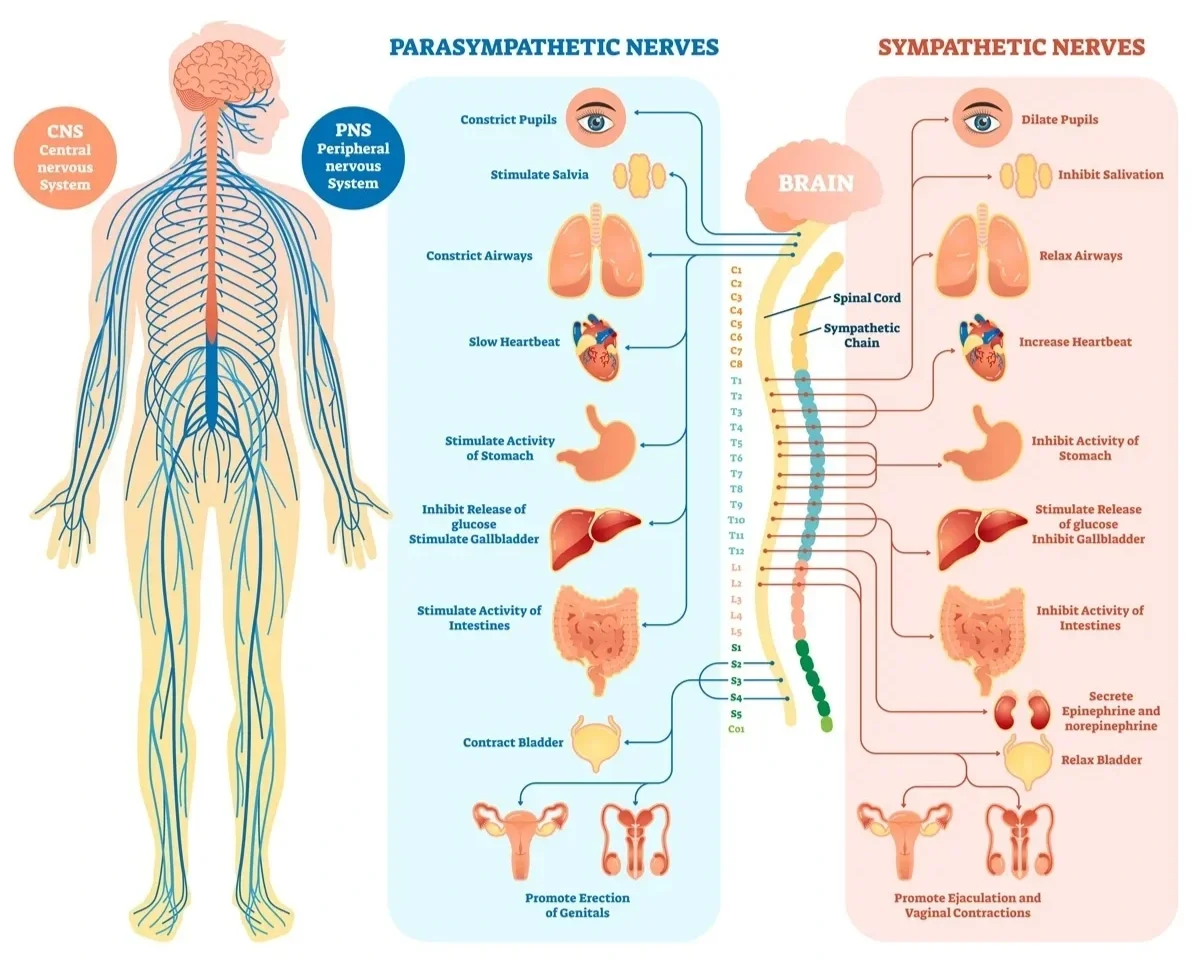
Nervous system: parasympathetic vs sympathetic
Burnout and the body
Burnout is more than feeling tired. It often includes reduced resilience, difficulty switching off, disrupted sleep and a sense that the body never fully recovers. When the body does not spend enough time in a relaxed state, repair processes slow down.
Self care that encourages the body to settle can help restore balance. This might include regular movement, nourishing meals, time away from screens, and massage that allows the nervous system to downshift.

Self care as health maintenance
Rather than viewing self care as indulgent, it is helpful to see it as maintenance. Just as we service a car to keep it running smoothly, the body benefits from regular attention.
Massage, for example, can help reduce muscle tension, improve circulation and encourage lymphatic flow, all of which support how the body manages stress and recovery.
Self care also supports emotional wellbeing. Taking time to rest and reconnect with the body can improve focus, mood and overall energy levels. These effects often carry into daily life, making it easier to cope with demands rather than constantly pushing through them.
Choosing self care with intention
Self care does not need to be elaborate. What matters is consistency and choosing practices that genuinely help you feel better. Whether it is booking a massage, prioritising sleep, moving your body or setting aside quiet time, these choices support optimal health over time.
In a month centred around love, self care can be a meaningful way to show care for yourself or someone else. It is not about indulgence, but about giving the body what it needs to function well, recover fully and feel more comfortable day to day.